Sustainability: From Cost Savings to Lasting Impact
How Four Seasons Learned to Think for the Long Term
Sometimes the beginning of a big idea is not dramatic at all.
At Four Seasons, the sustainability story began with a conversation about an electric bill — or more specifically, what those bills might soon become.
In 2006, as energy deregulation approached, company leaders were preparing for the possibility of a 40 percent increase in electricity costs. For a refrigerated warehouse operation, that kind of jump would be significant.
Nelson Longenecker, who led Facilities at the time, still remembers the moment. People were gathered around a conference table talking through what a 40 percent increase would mean. Someone finally said what everyone was thinking: if nothing changed, the company would simply spend more and more every year just to do the same work.
It was the kind of number that made people stop and think.
And once they did, the question became clear:
How could Four Seasons use less energy and operate more efficiently over the long run?
That question marked the beginning of a long-term effort that would quietly reshape the way the company thought about its buildings, equipment, and daily operations.
Setting a Goal
Rather than waiting for energy prices to climb, the company decided to act.
Leadership set a goal that was both simple and ambitious: reduce electric consumption by 40 percent within four years.
That kind of progress would not come from one large project. It would come from many smaller ones working together over time.
Lighting systems were evaluated. Refrigeration equipment was studied. Motors, compressors, airflow, and insulation were examined for ways to reduce waste and improve efficiency.
One project led to another.
And over time, the work became part of a larger mindset: the belief that the operation could always run a little smarter tomorrow than it did today.
Drawing Associates In

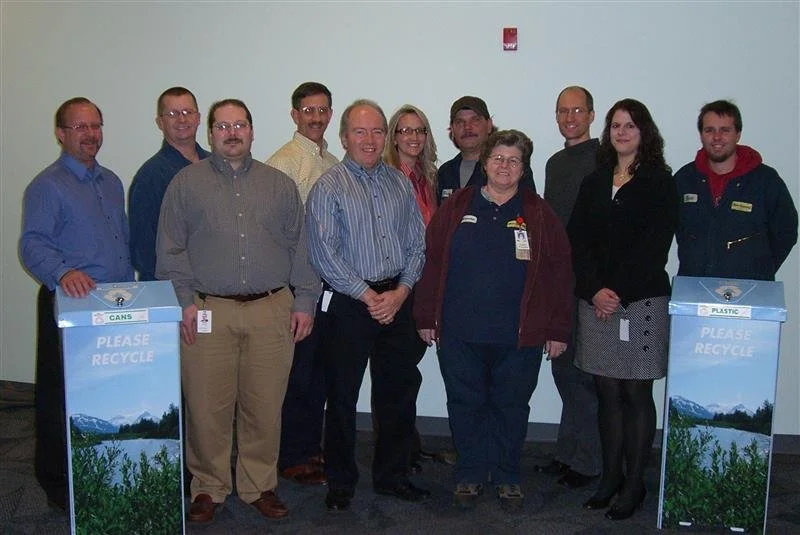
In 2008, Four Seasons formed the G.R.E.E.N! Team — short for “Gaining Resource & Energy Efficiency Now.” The team brought together associates from across the Family of Companies with a shared mission:
“Implementing innovative yet proven cost-saving methods to reduce energy use, conserve resources, and improve the environment.”
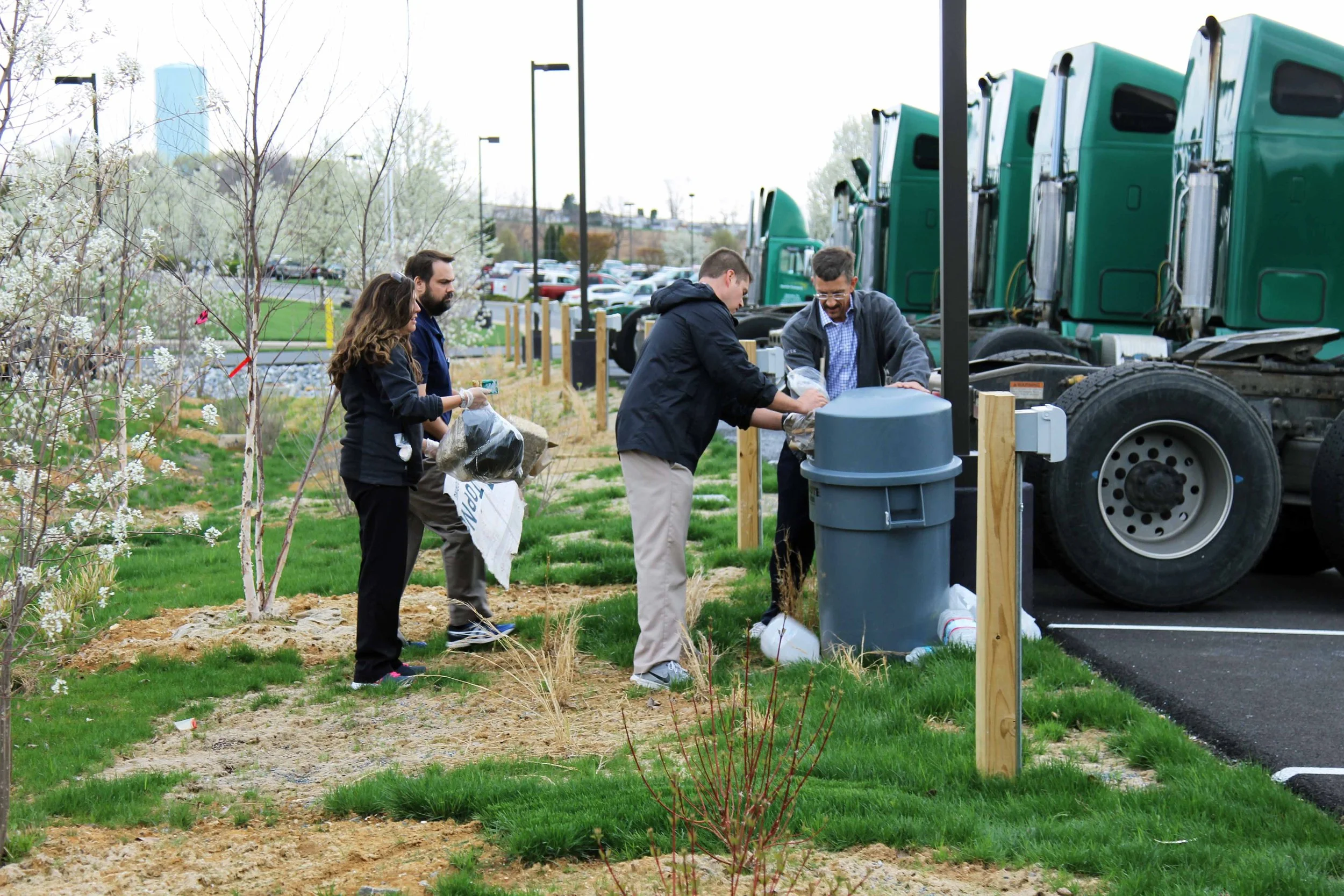
The G.R.E.E.N! Team was asked to do more than talk about sustainability. Associates were encouraged to identify opportunities in their own work areas, suggest new ideas, share what was working, and help build a culture of conservation throughout the company.
The group focused on energy use, recycling, waste reduction, water conservation, packaging, and fuel efficiency. It also sponsored associate events and contests that helped make sustainability part of everyday life at Four Seasons.
What is especially striking looking back is how many of the team’s “future initiatives” eventually became reality. In 2008, the group was already talking about solar power, LED lighting, SmartWay transportation, plug-in vehicles, and other ideas that would shape the company in the years that followed.
The name captured the spirit of the effort.
Sustainability was not only about equipment, utility bills, or projects behind the scenes. It was also about awareness, participation, and helping associates see that small decisions across the business could add up over time.
Recycling With a Purpose
Energy efficiency was only part of the picture.
In 2000, Four Seasons launched a recycling program designed to reduce waste and keep useful materials out of landfills. Over time, that effort grew into a company-wide system that found new uses for materials that once would have been thrown away.
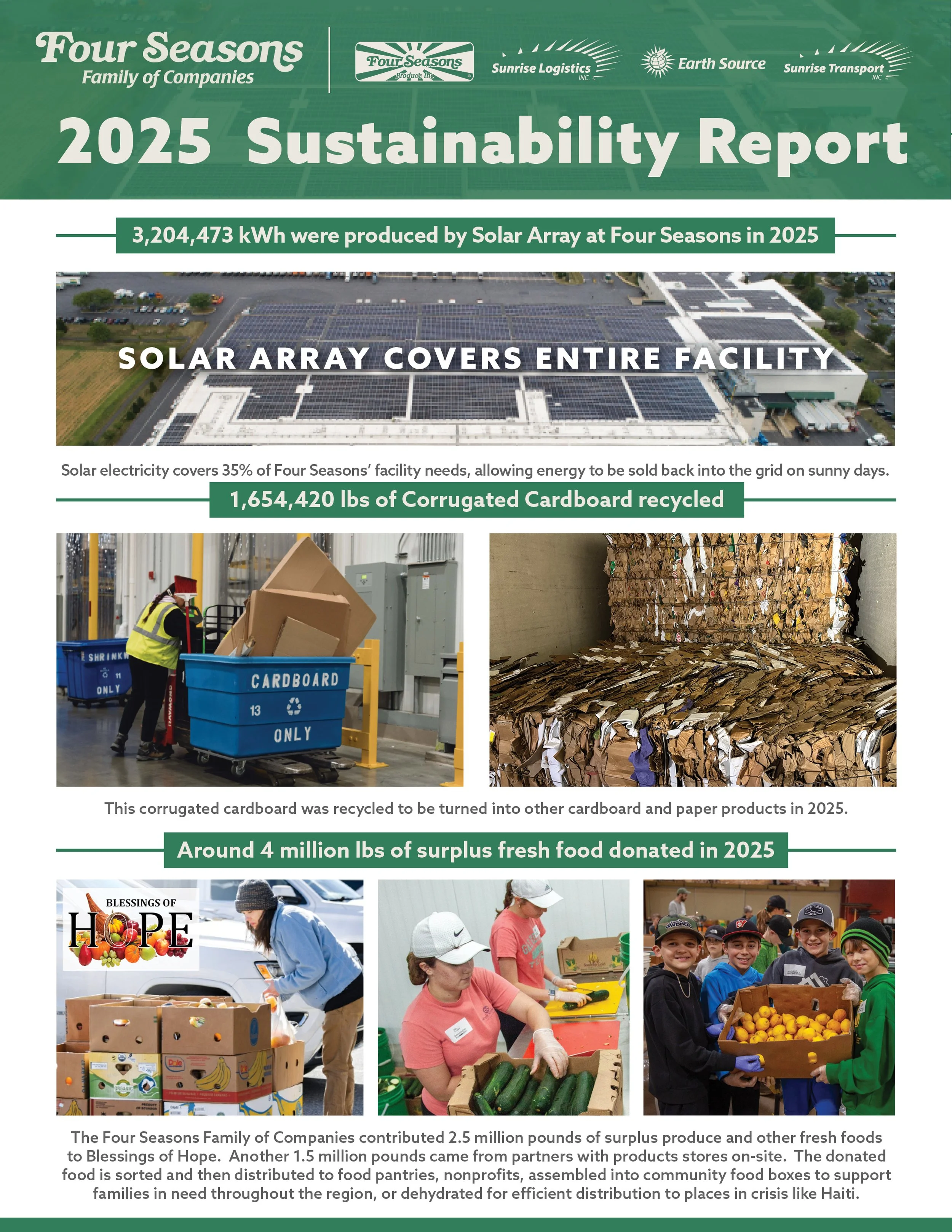
Corrugated cardboard was recycled into new cardboard and paper products.
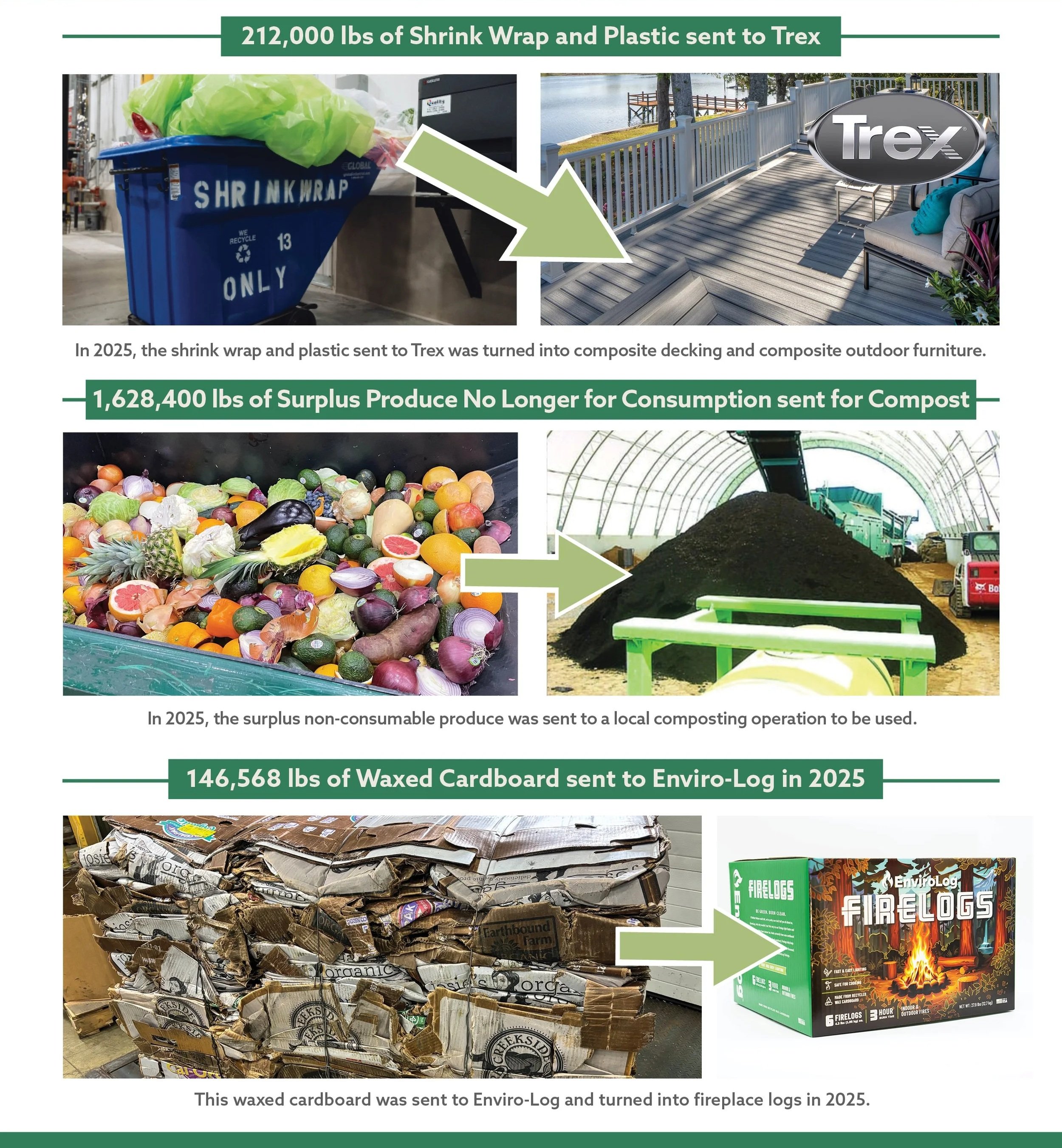
Shrink wrap and other plastics were sent to Trex, where they were turned into composite decking and outdoor furniture.
Waxed cardboard, which is often difficult to recycle, was instead sent to Enviro-Log and transformed into fireplace logs.
Even produce that could no longer be consumed found a second purpose. More than 1.5 million pounds of surplus produce were sent to composting operations, where it could return to the soil rather than become waste.
The work was practical and straightforward.
Find a better use. Waste less. Keep improving.
When “Waste” Could Still Feed Someone
Not everything that could no longer be sold needed to be thrown away.
Over the years, Four Seasons also found ways to make sure good food reached people who could use it.
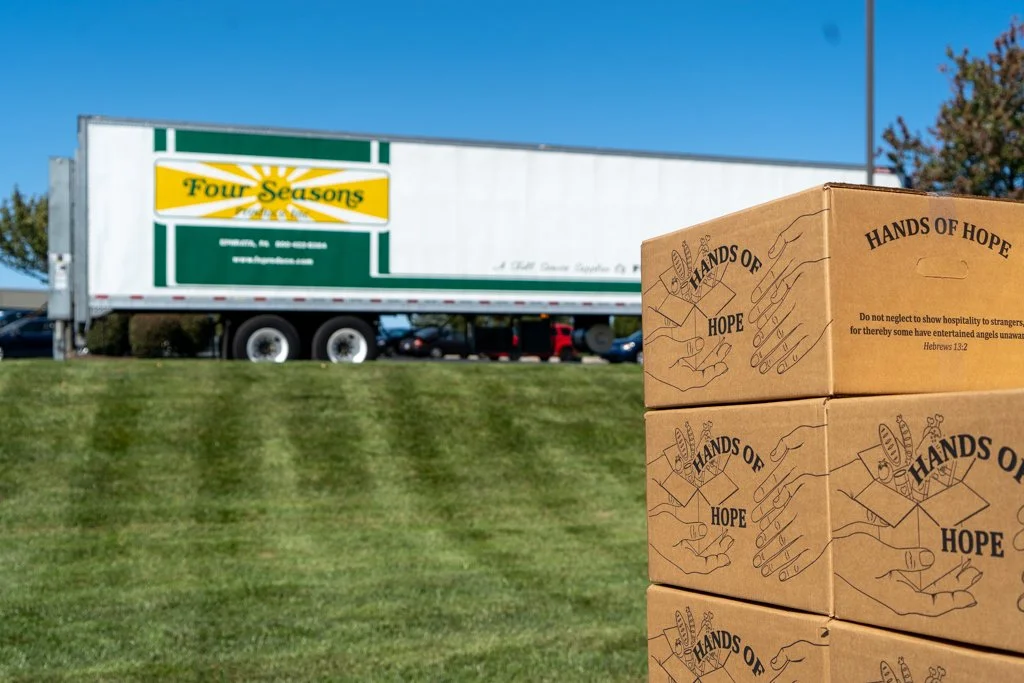
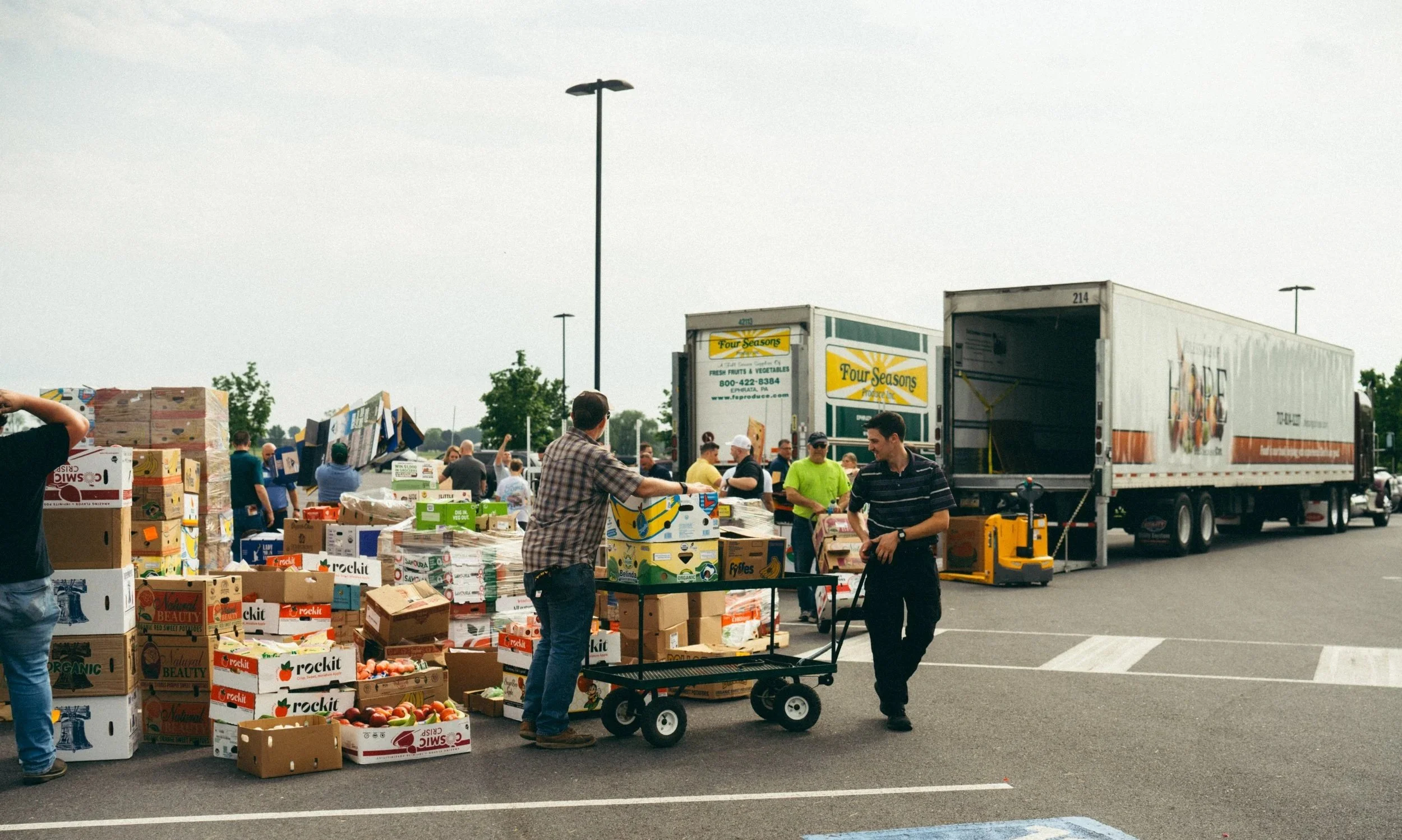
Produce that was still safe and nutritious, but no longer suitable for sale, was donated through partnerships with organizations like Blessings of Hope. In 2025 alone, the Four Seasons Family of Companies contributed nearly 2.5 million pounds of surplus fresh food. Another 1.5 million pounds came from partners with product stored on-site.
At Blessings of Hope food is sorted and then distributed to food pantries, nonprofits, assembled into community food boxes to support families in need throughout the region, or dehydrated for efficient distribution to places in crisis like Haiti.
For Four Seasons, the effort reflected the same practical mindset that shaped the company’s broader sustainability work.
If something still has value, find a better use for it.
Sometimes that meant turning cardboard into new paper products or shrink wrap into Trex decking.
And sometimes it meant making sure good food made it to someone’s table instead of a landfill.
Solar on the Roof
One of the most prominent examples of that work eventually appeared overhead.
Solar energy had been discussed for years before the project moved forward. Like many long-term investments, it required patience. Technology had to mature. Costs had to make sense. The timing had to be right.
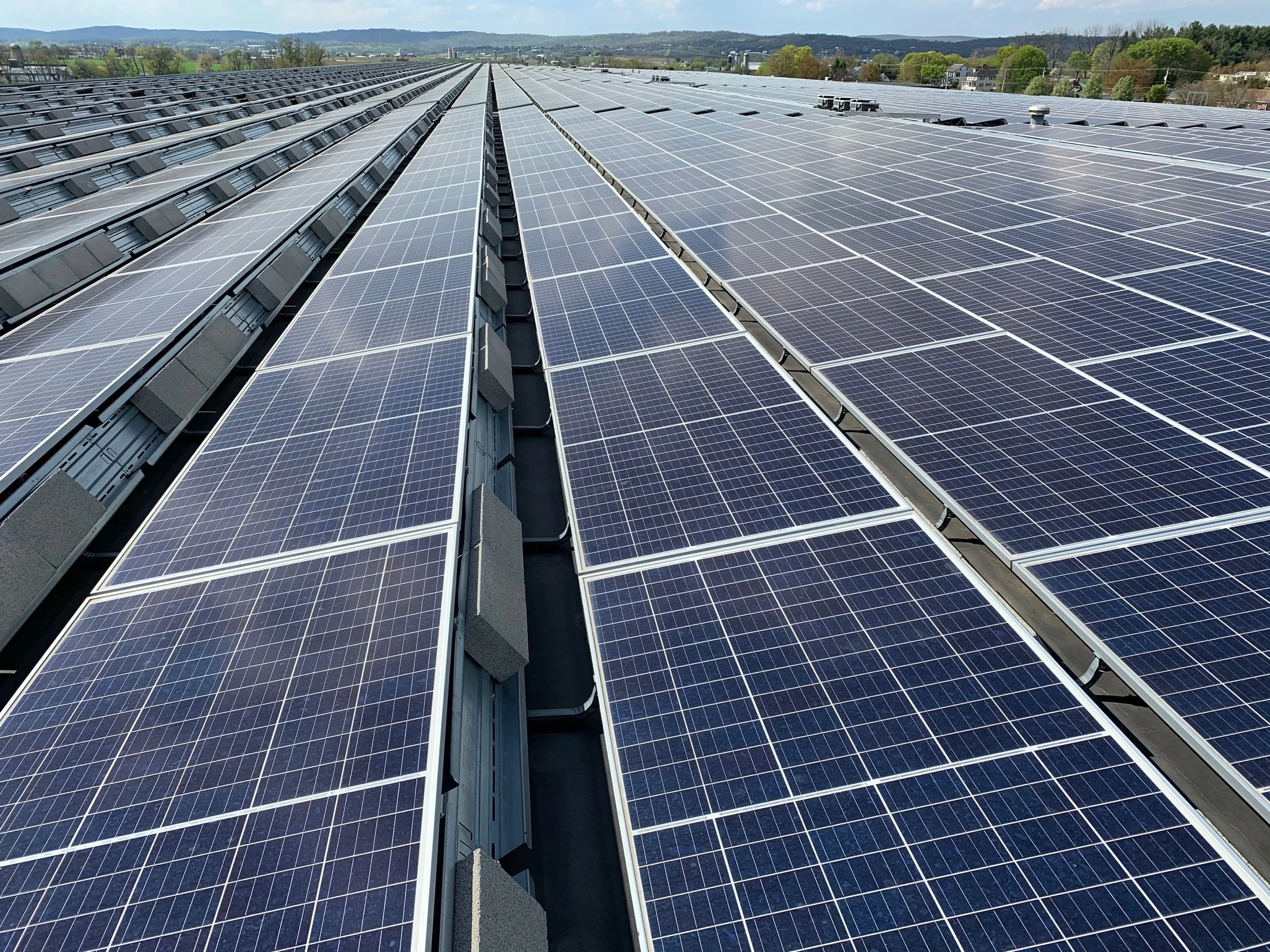
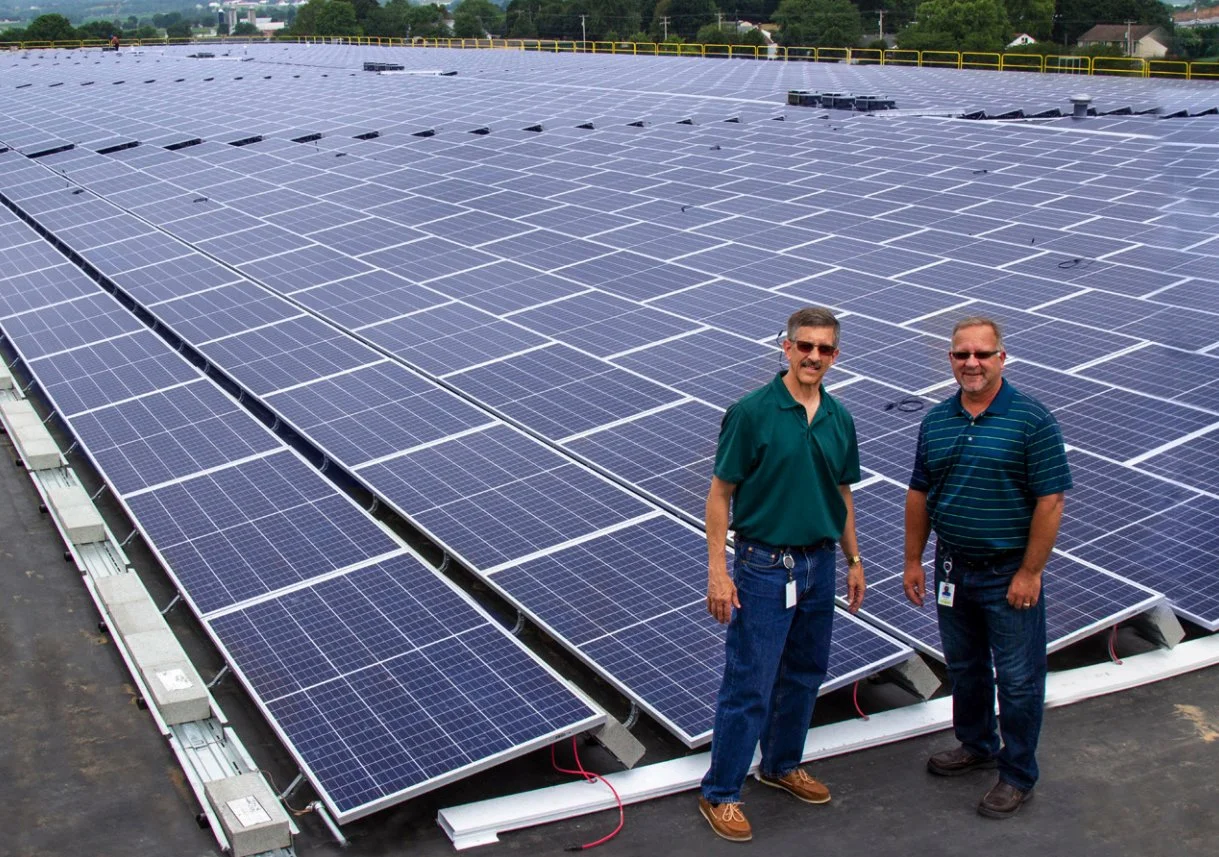
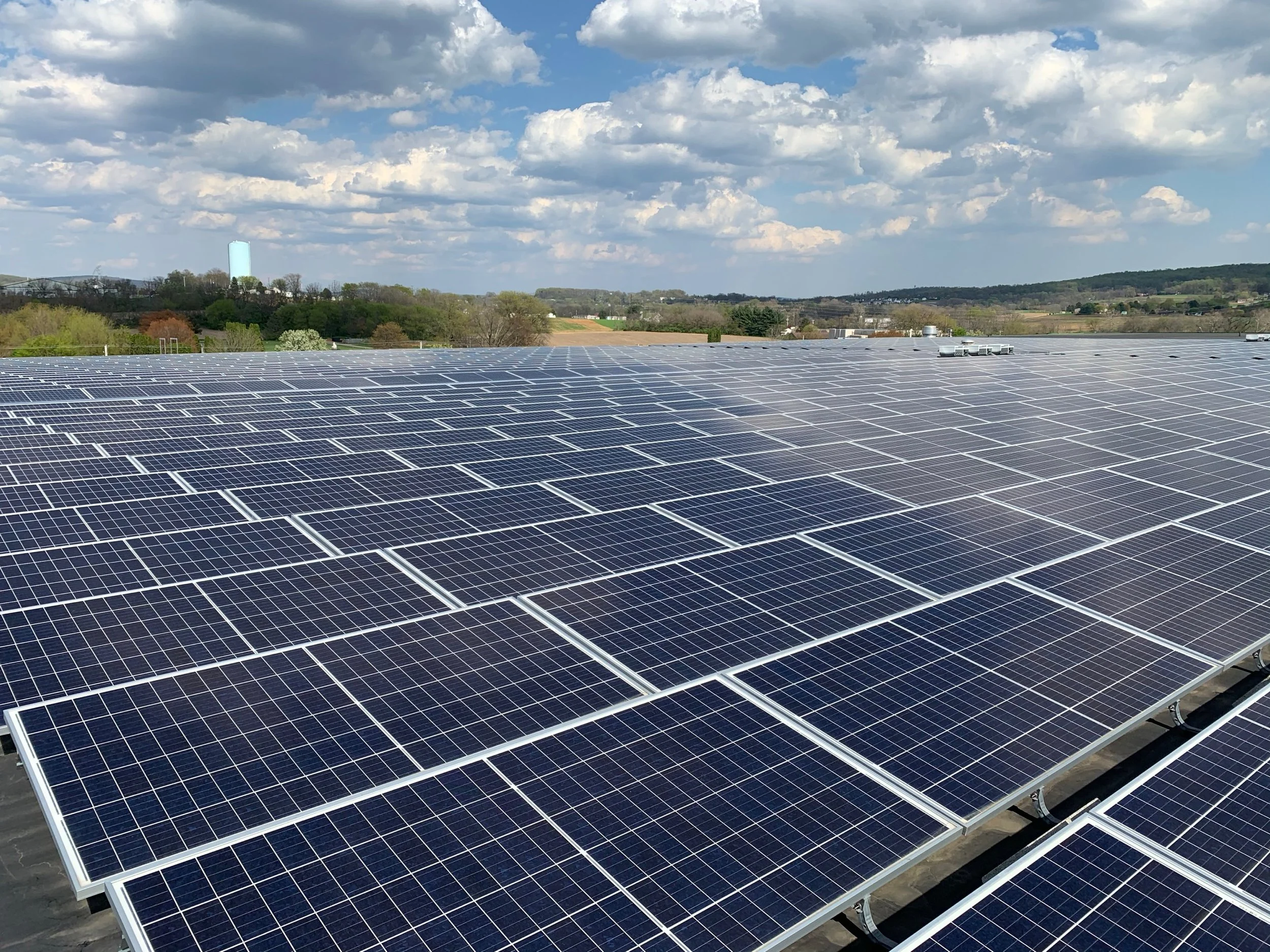
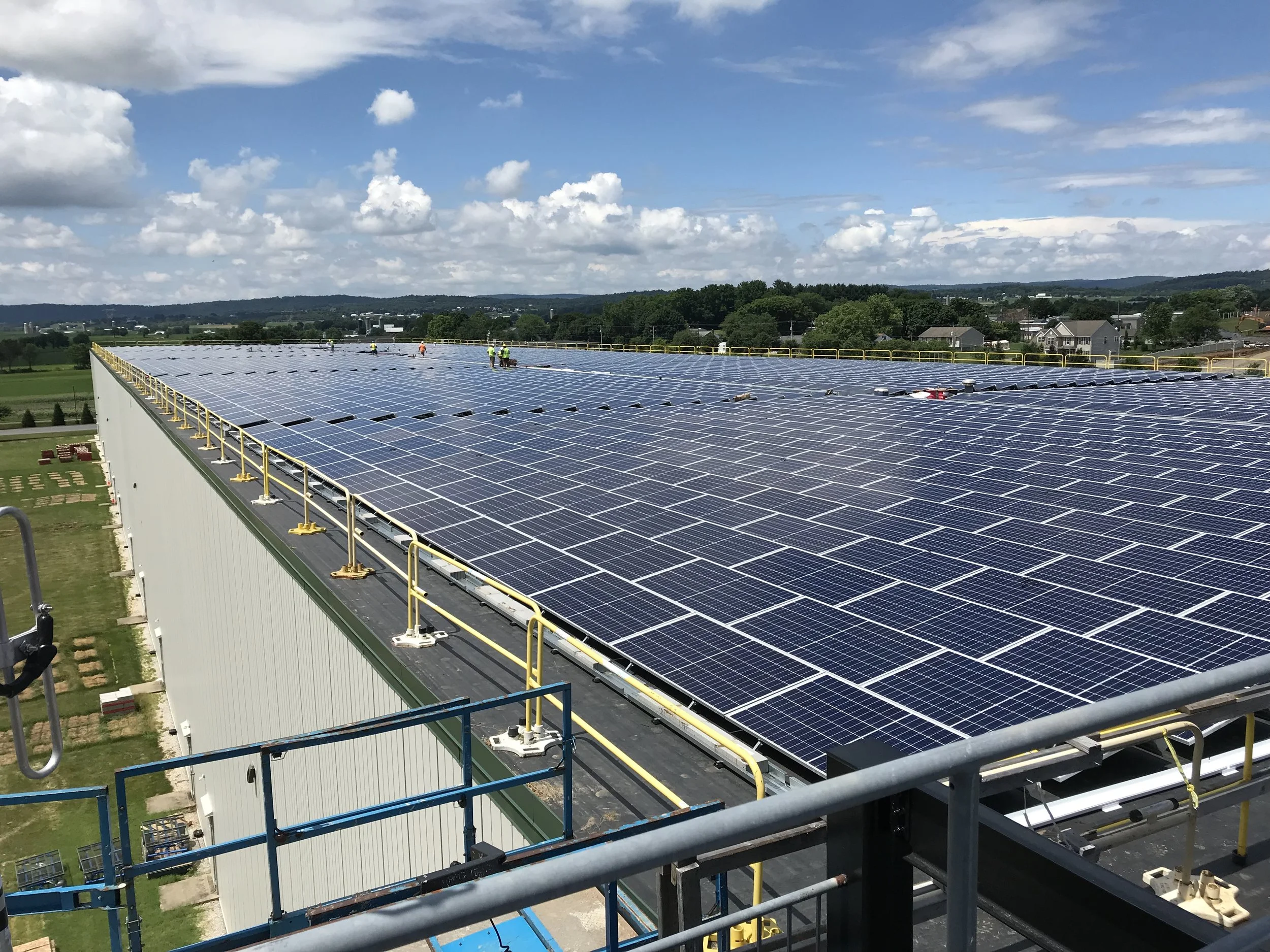
When the first solar array was installed in 2018, nearly 3,900 panels transformed the warehouse roof into something more than empty space. What had once been a broad black roof became a source of energy.
Years later, as the Wabash expansion was completed, the array grew again. More than 3,500 additional panels were added over the office, packing area, and warehouse expansion roof. Today, the solar array stretches across nearly the entire facility.
In 2024 alone, the array produced more than 1.36 million kilowatt-hours of electricity — enough to provide roughly 35 percent of the facility’s energy needs, with excess power flowing back into the grid on bright summer days.
To many people, the panels became the most visible symbol of Four Seasons’ sustainability efforts.
But solar was never the whole story.
The company often said it needed to reduce power before it could produce power. The years spent improving lighting, refrigeration, insulation, and equipment efficiency made the solar array possible — and made it more meaningful.
Visible Signs of Change
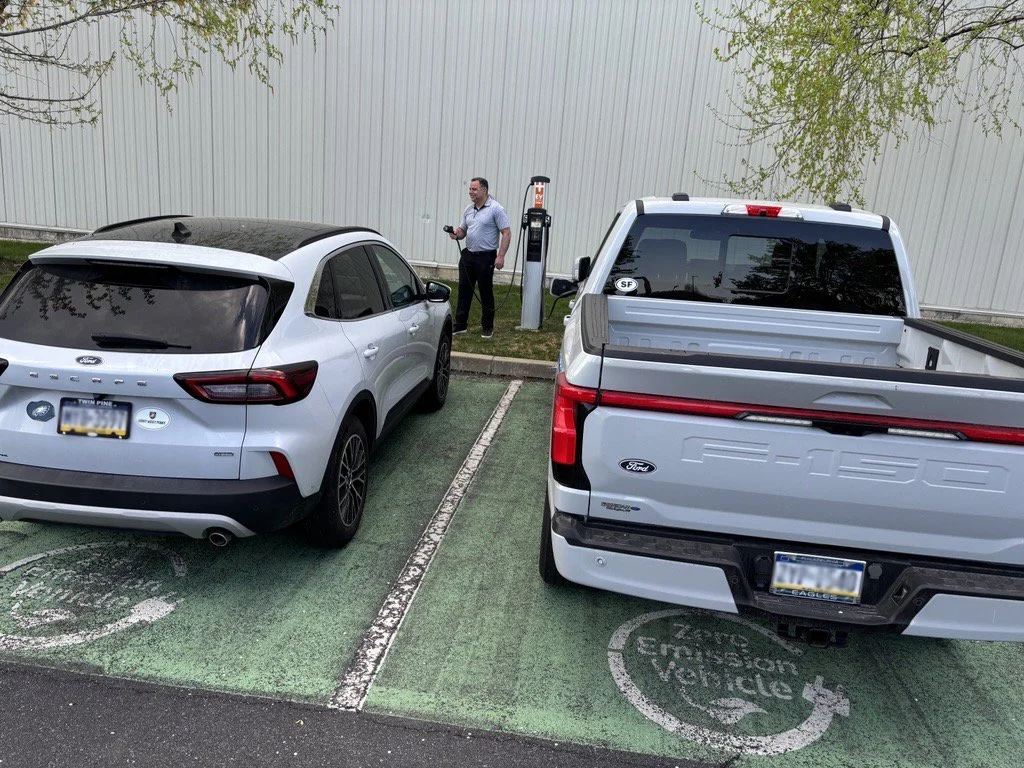
Over time, other visible signs of that effort began to appear across the campus as well.
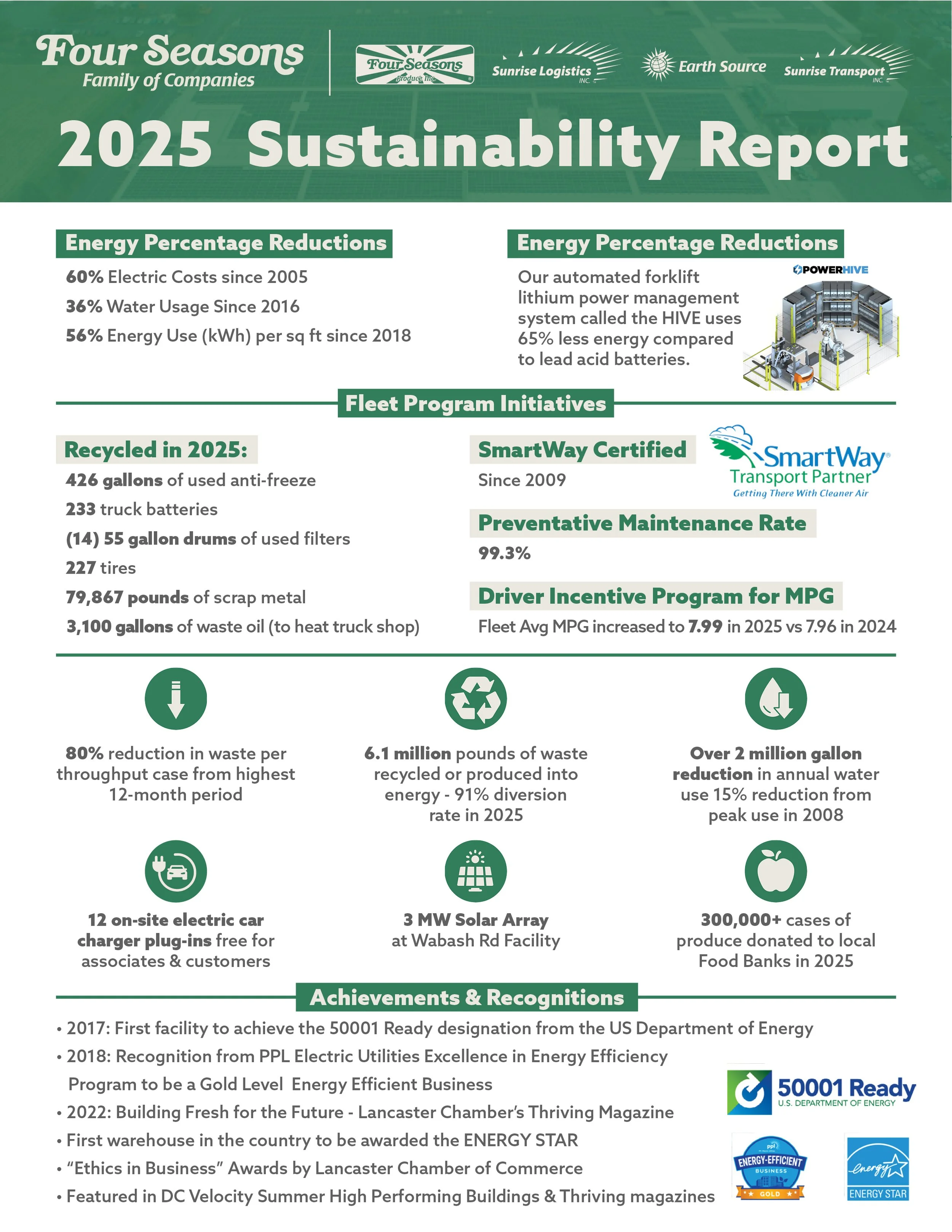
One example is the electric vehicle charging stations installed at 400 Wabash. Offered free for associates, visitors, and customers, the stations reflect the same practical approach that has shaped the company’s broader sustainability efforts.
The point was not simply to add something new.
It was to make lower-impact choices a little more accessible for the people already coming to the facility each day.
Like so much of the work behind the scenes, it was another way of making long-term thinking part of everyday operations.
Recognized for the Work
Eventually, that work drew attention beyond the company.
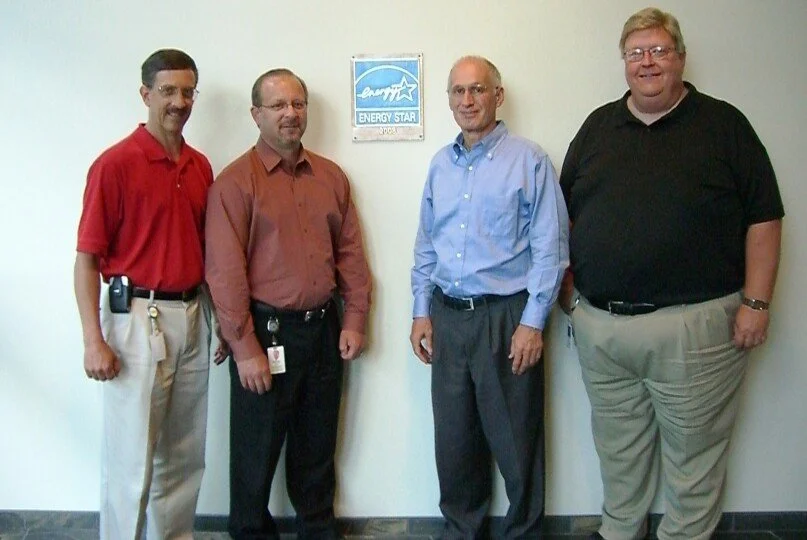
The refrigerated warehouse at Four Seasons became the first facility of its kind in the country to receive ENERGY STAR certification, reflecting years of careful effort to improve building performance and reduce energy consumption.
The company also earned recognition from the U.S. Department of Energy, PPL, the Lancaster Chamber, and the EPA’s SmartWay program.
Recognition had never been the goal.
But it affirmed something the team already understood: thoughtful improvements, made consistently over time, can have a lasting impact.
The same was true of the broader sustainability work.
It was not built around one moment. It was built through years of paying attention and doing the work.
Beyond the Building
Sustainability goes beyond recycling and energy use—it includes food sourcing, supply chains, and how both land and people are treated.
Local
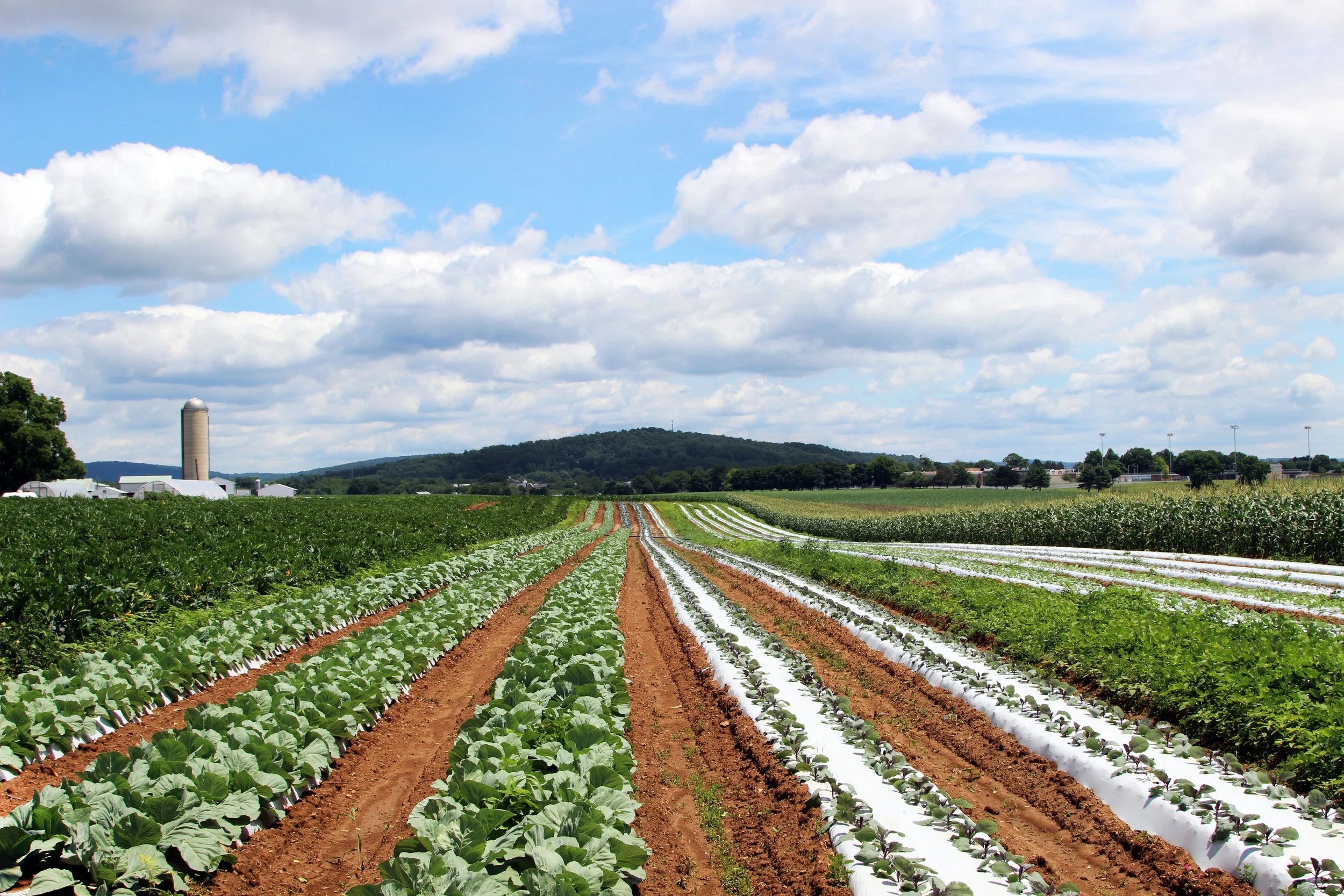
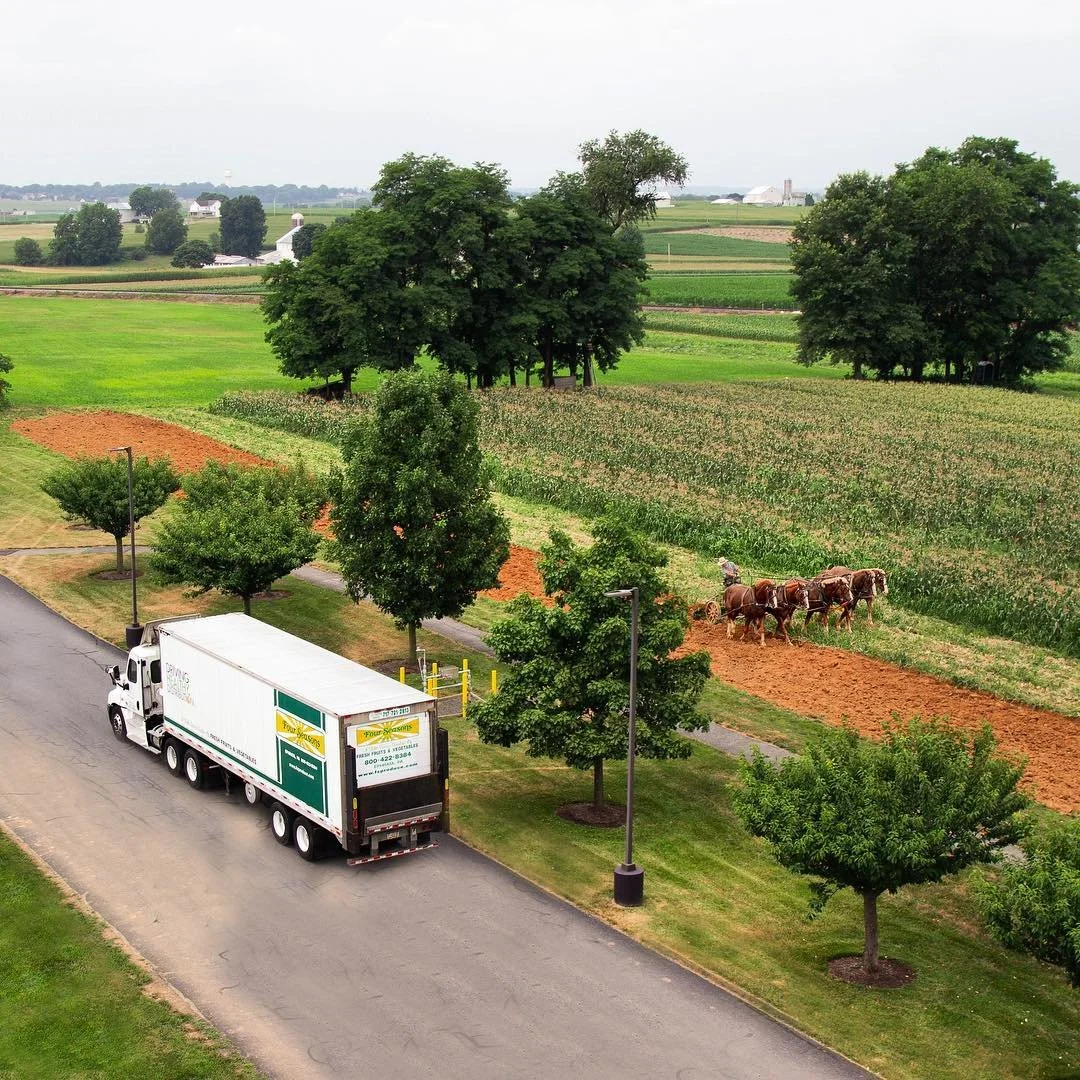
Four Seasons Produce, based in Lancaster County, PA, has partnered with local growers for decades—part of its core buying approach. The company defines “local” as farms within its delivery network, allowing trucks to pick up product after store deliveries rather than return empty. This includes farms across Pennsylvania, the Mid-Atlantic, and Northeast.
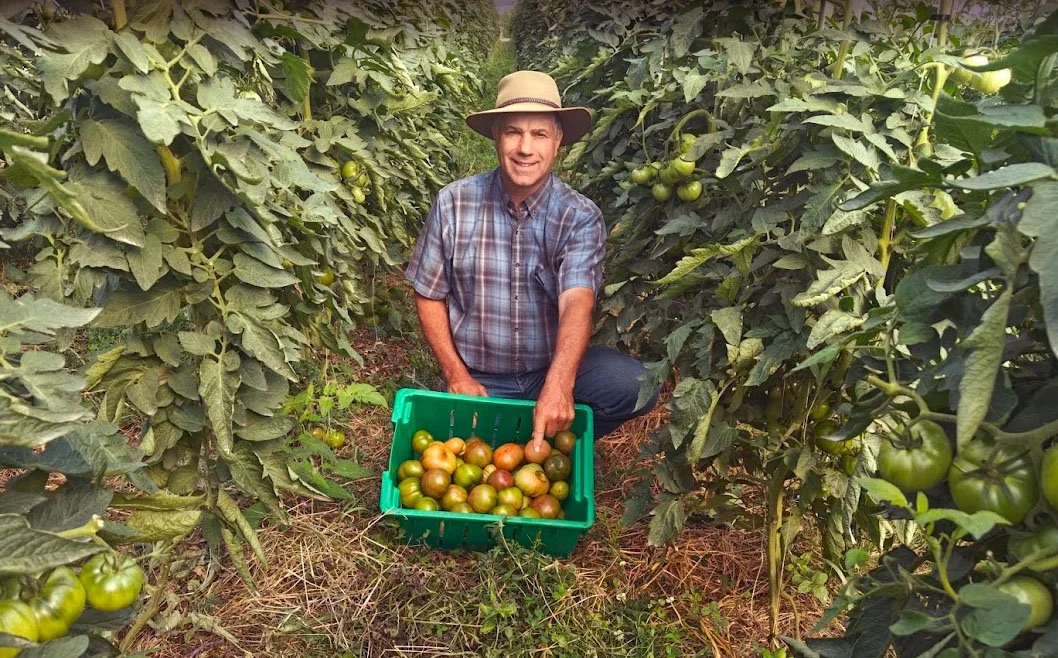
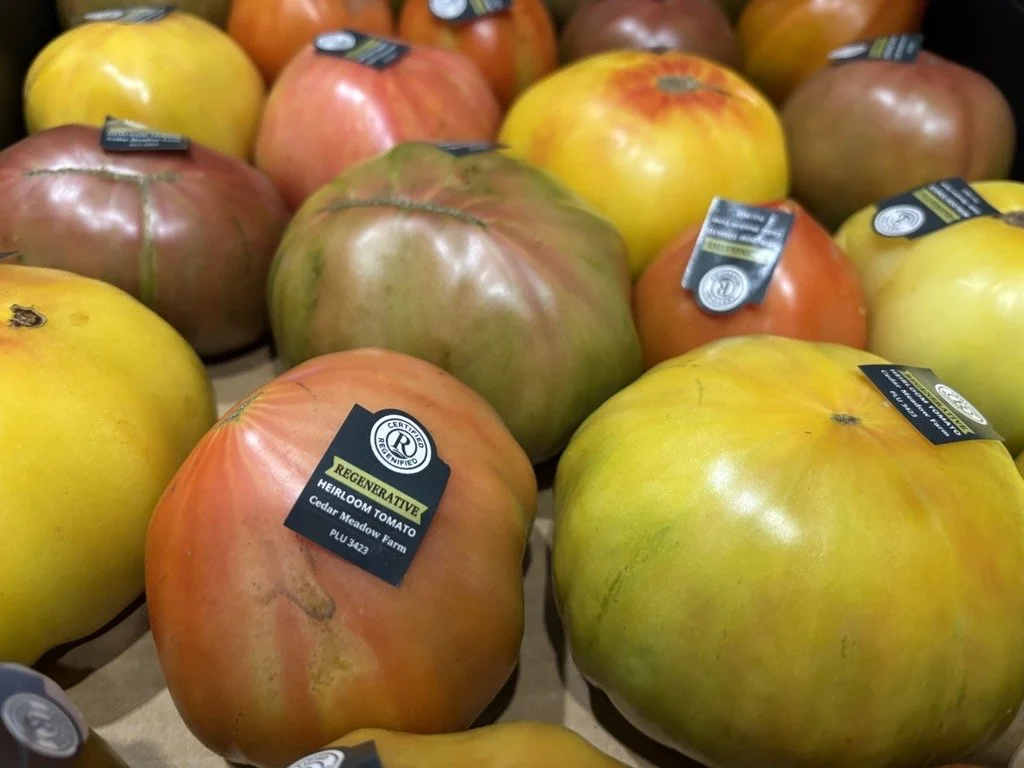
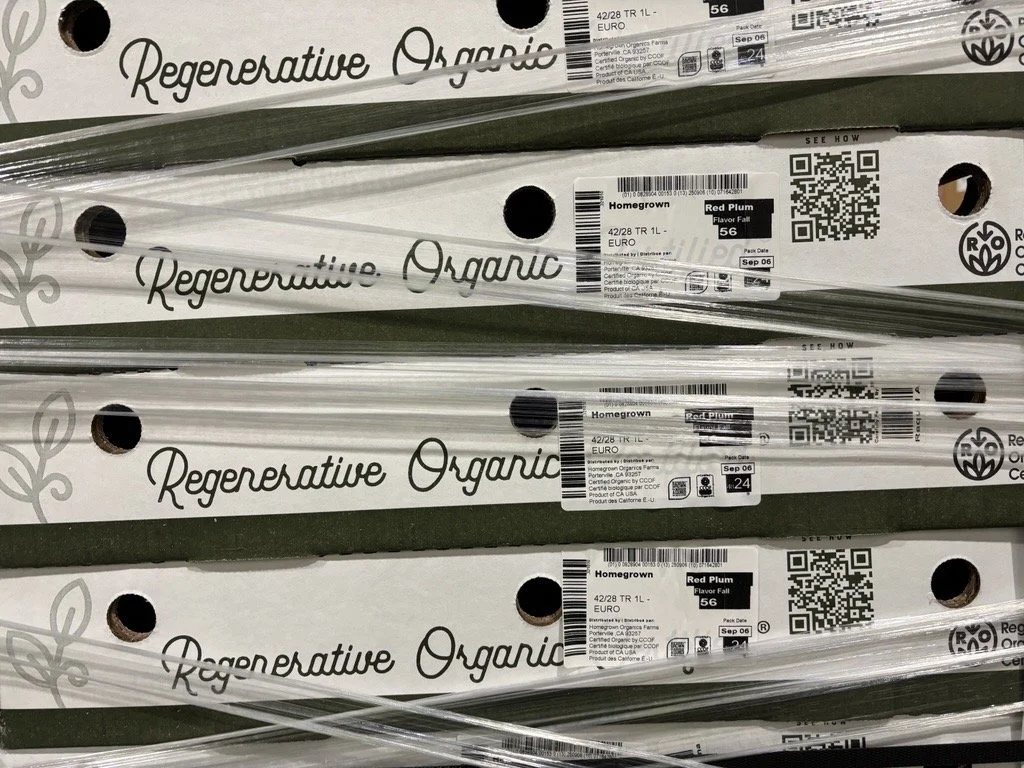
Regenerative Ag
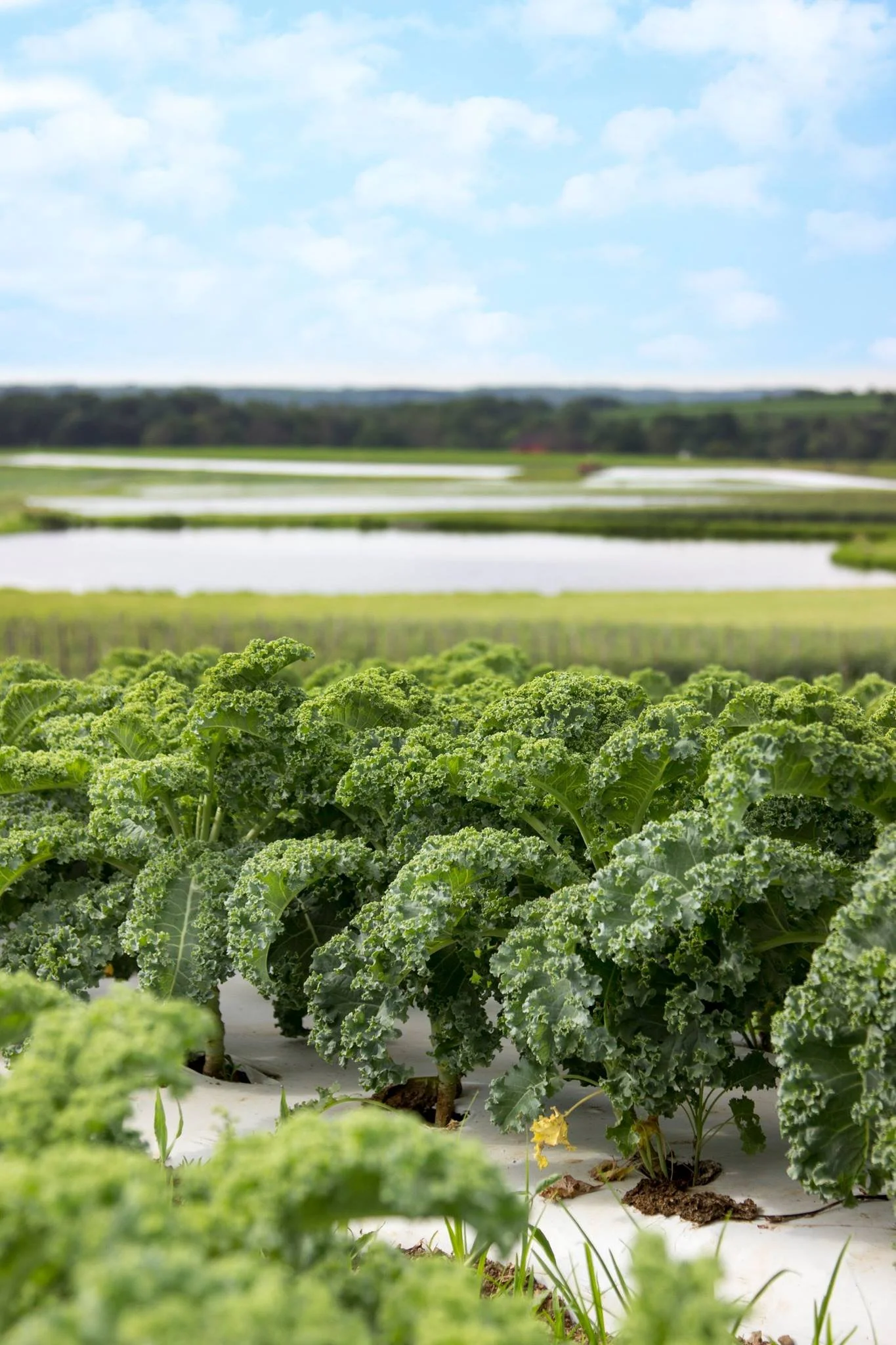
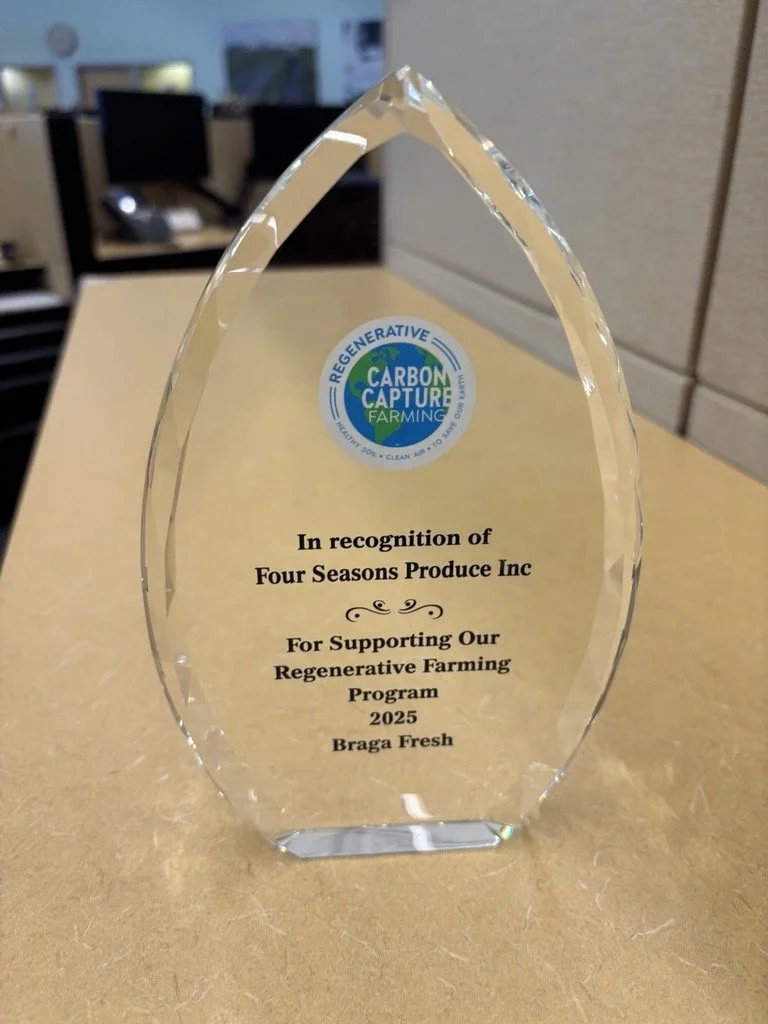
More recently, the company has focused on regenerative agriculture, which aims to improve soil health and capture carbon. Four Seasons connects regenerative and regenerative organic growers with buyers who want to support these practices.
Organic
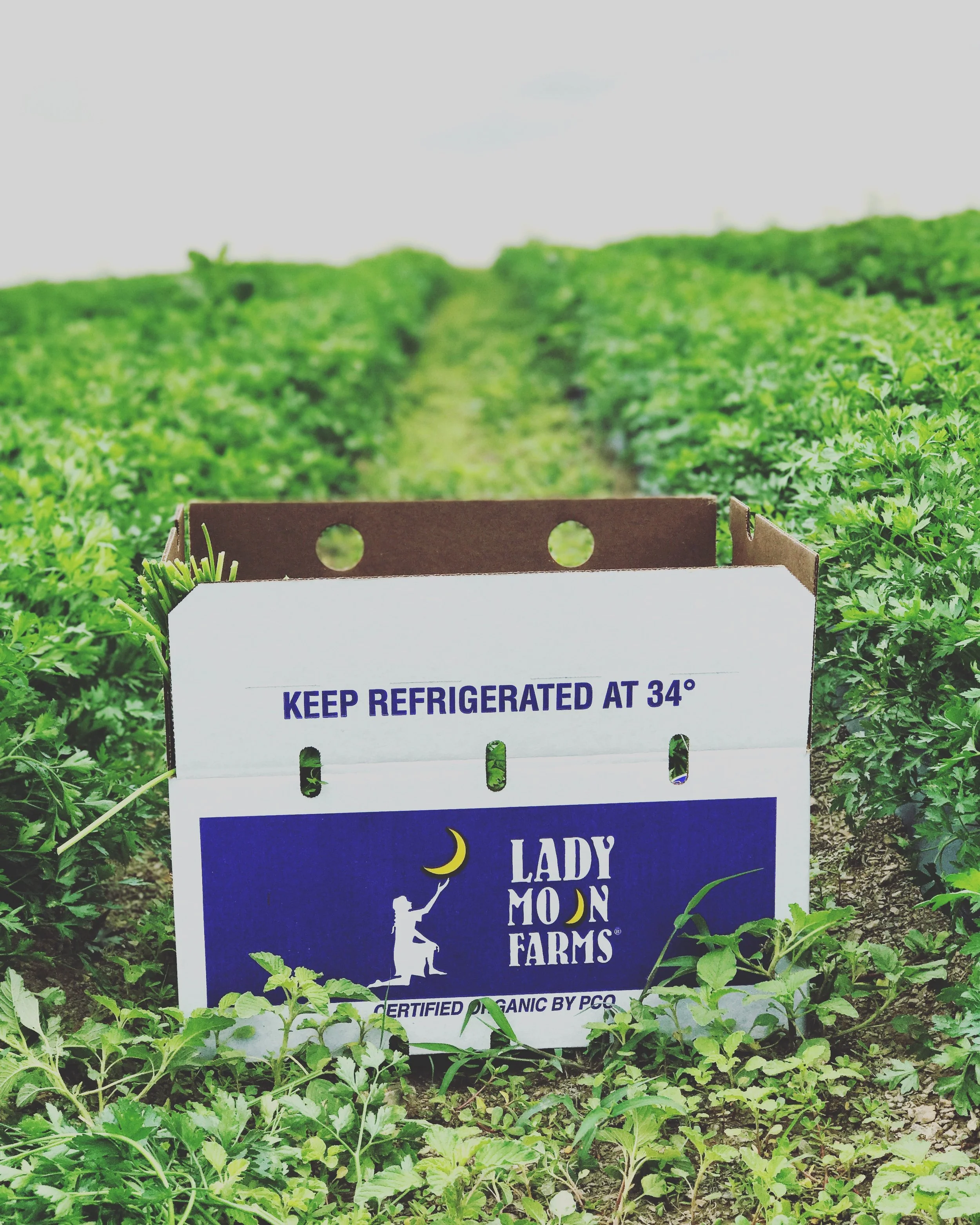
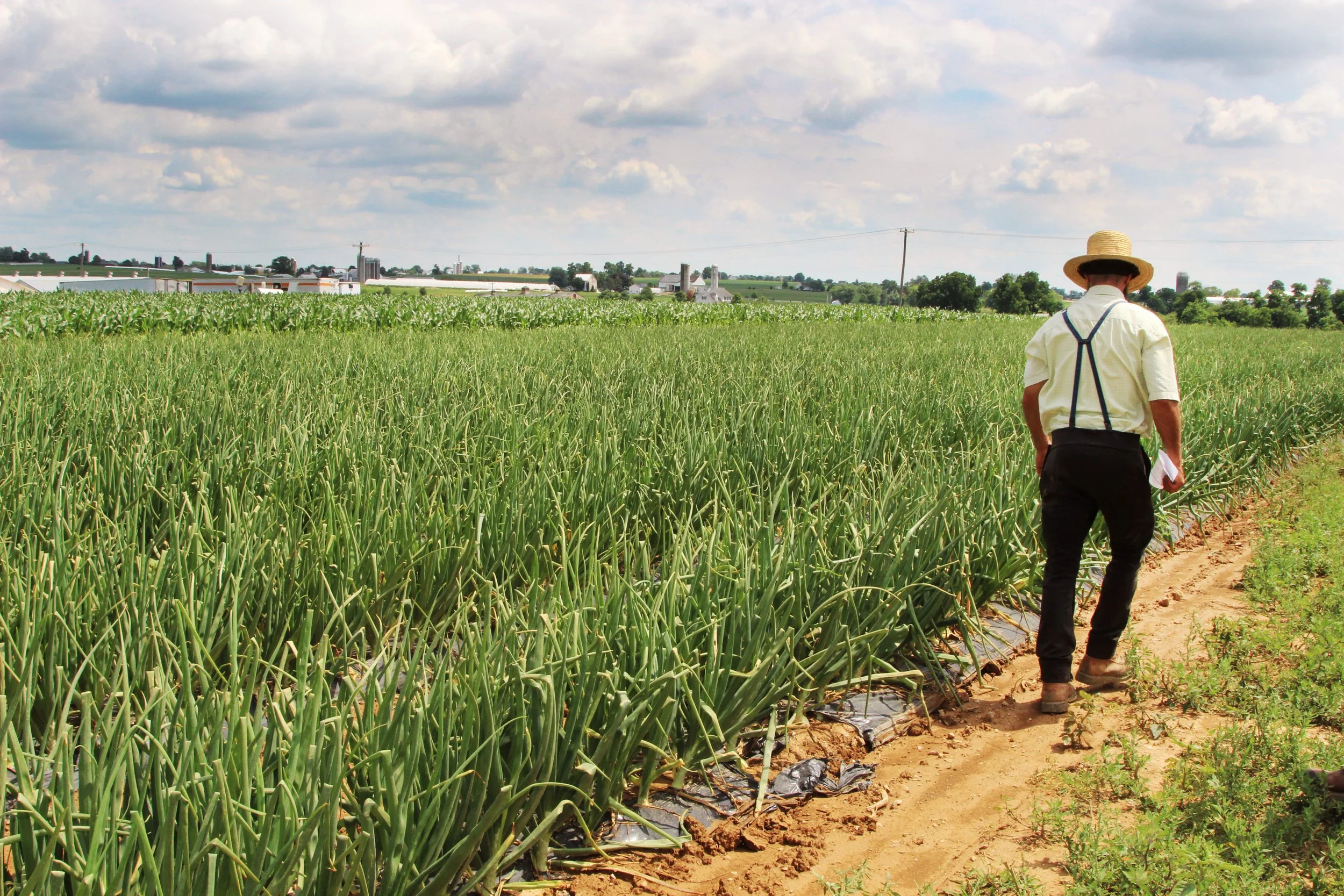
Founder David Hollinger prioritized organic farming early on. As demand grew in the 2000s, Four Seasons helped expand supply by supporting farmers transitioning to organic—connecting them with resources like Penn State Extension and certifiers, and bringing products to market. Many of these farms are Mennonite and Amish.
Expanding Fair Trade Programs
Sustainability also includes how people are treated. Four Seasons supports fair conditions for farm workers, including in regions with weaker labor protections.
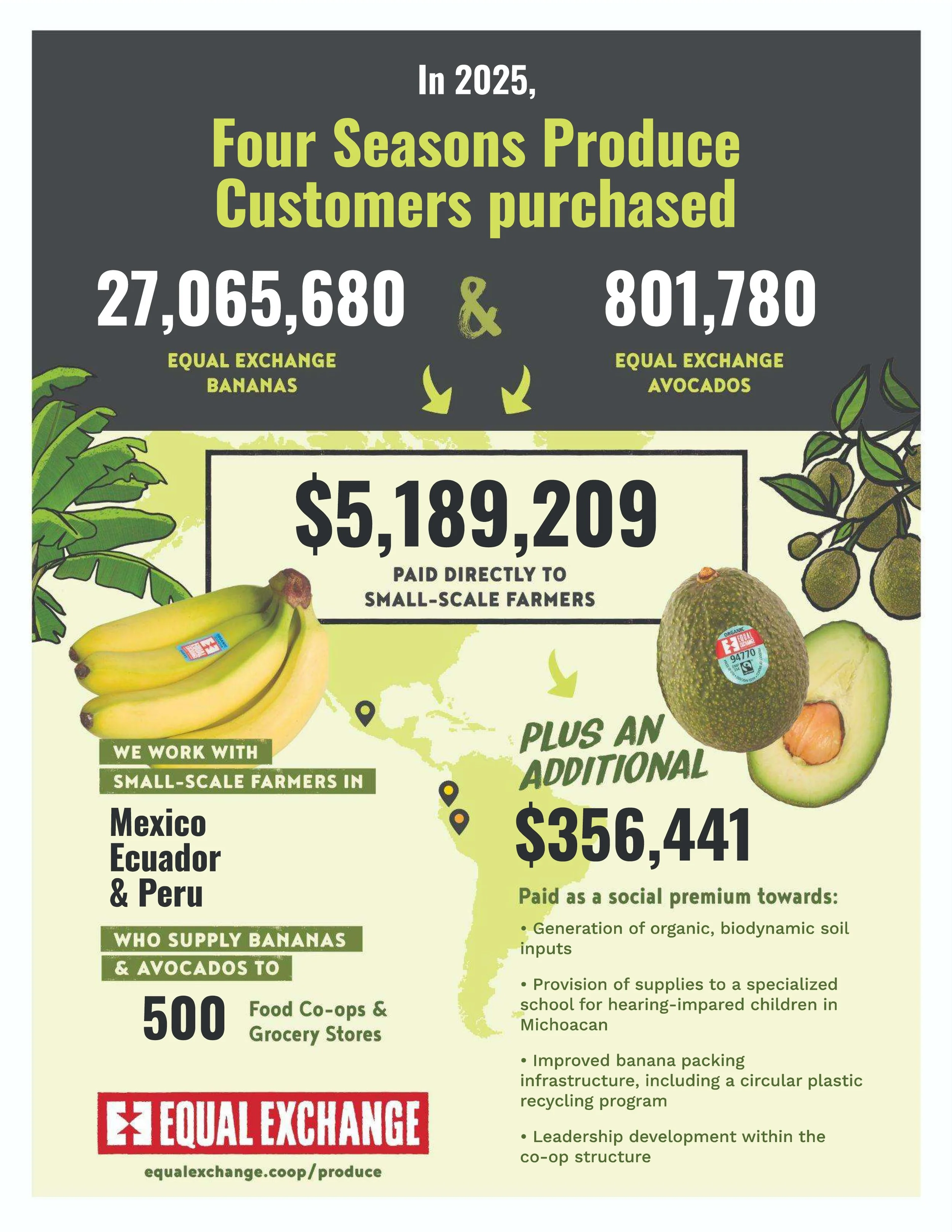
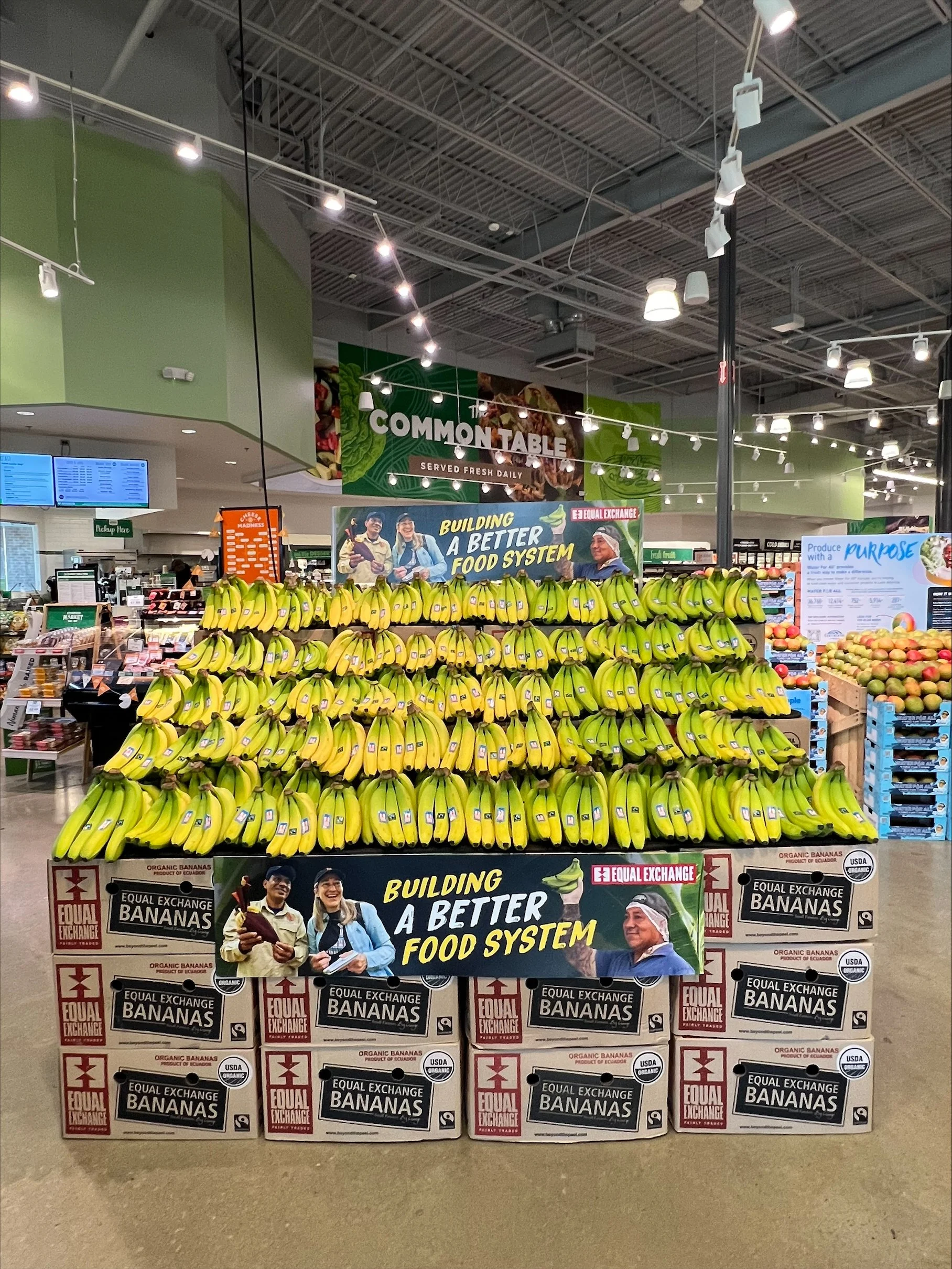
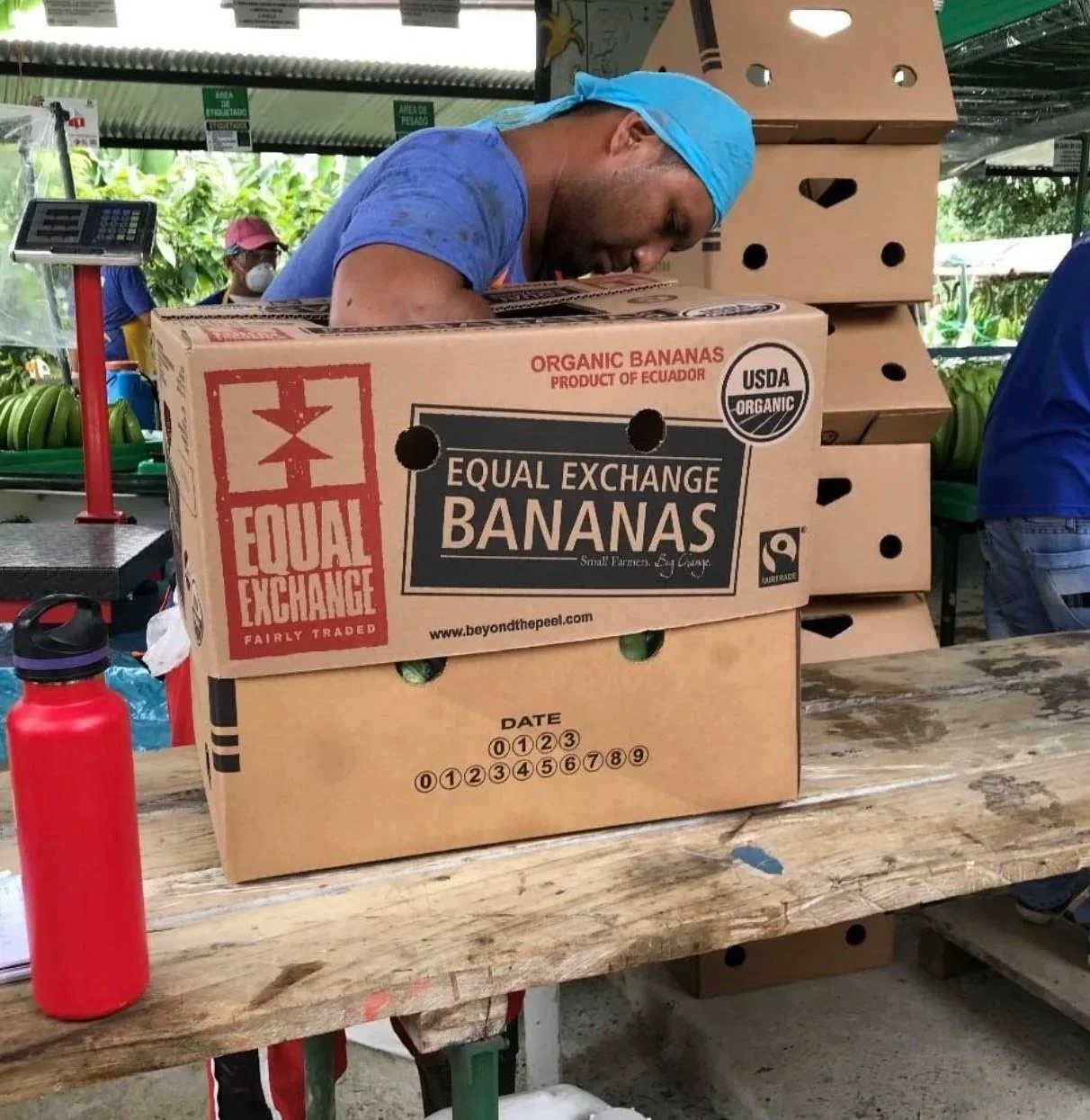
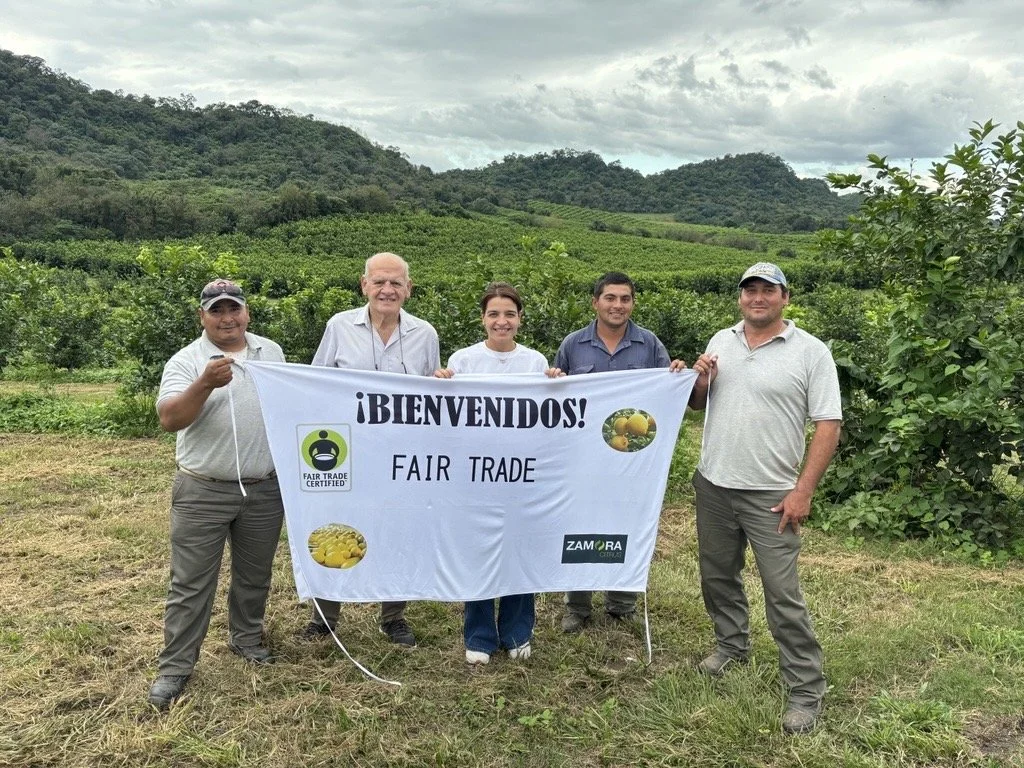
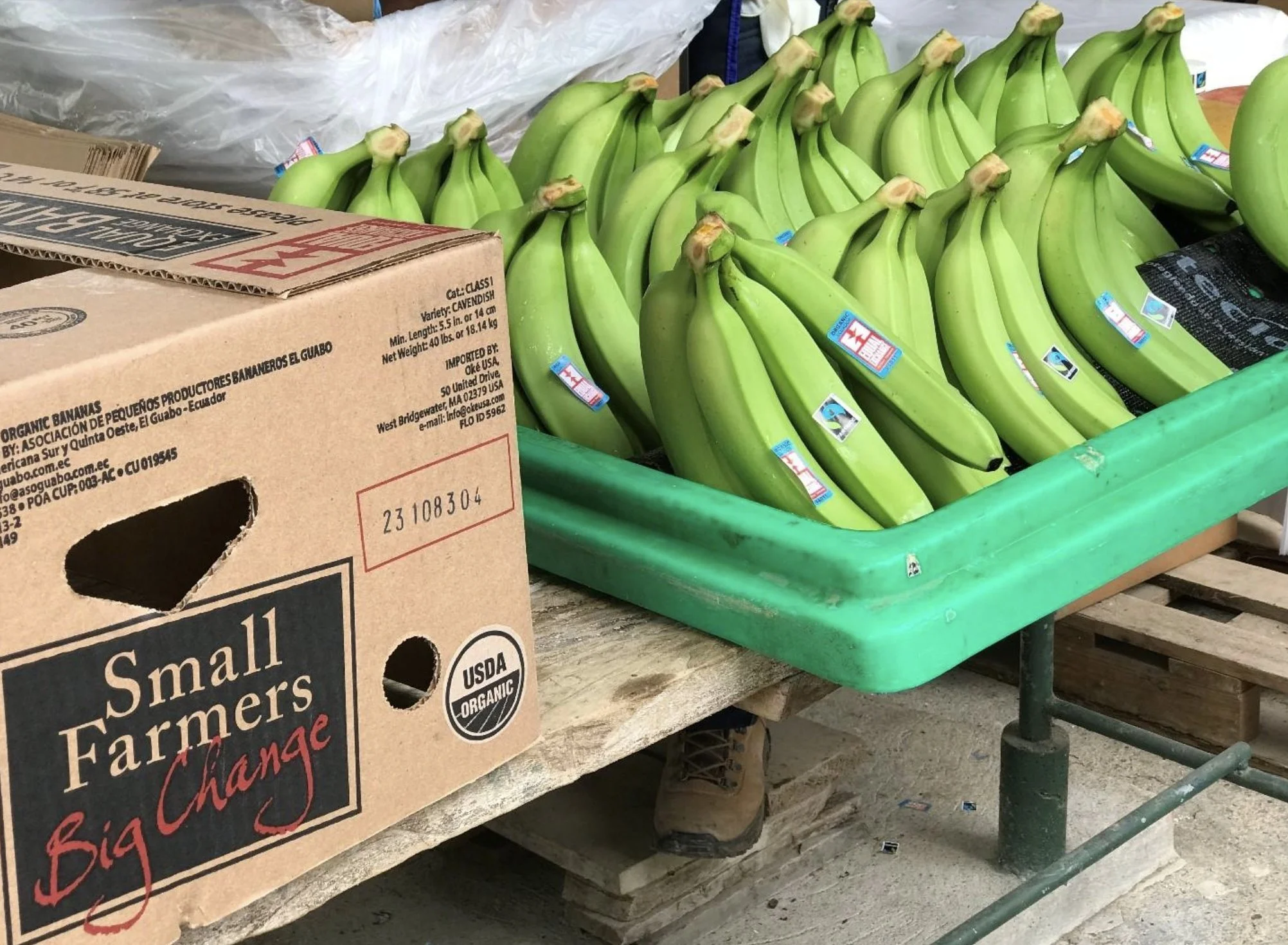
This work began about 20 years ago with organic fair trade bananas sourced through Equal Exchange. Fair trade ensures fair pricing and provides premiums that support workers and their communities. With retailer support, Four Seasons has expanded fair trade organic offerings to include berries, avocados, and more. Its sister company, Earth Source, partnered with a lemon grower in Argentina to achieve organic and fair trade certification and supply the U.S. during California’s off-season—benefiting farm workers and communities.
In the U.S., Four Seasons also supports growers certified by the Equitable Food Initiative, which promotes fair labor and safe working conditions.
The Long View
Looking back, the sustainability story at Four Seasons was never about one project.
It was about a way of thinking.
The decision in 2006 to confront rising energy costs led to a goal that pushed the company to look differently at its buildings, equipment, and daily operations. Many improvements followed. Recycling expanded. Associates were drawn into the effort. Solar became part of the picture. Support for growers and sustainable agriculture grew alongside it.
And over time, something important happened.
Even as the company grew and the campus expanded, the overall electric bill eventually became lower than it had been before the effort began.
That outcome captured the philosophy behind the entire effort.
Pay attention.
Improve what you can.
And make decisions that will matter for the long run.